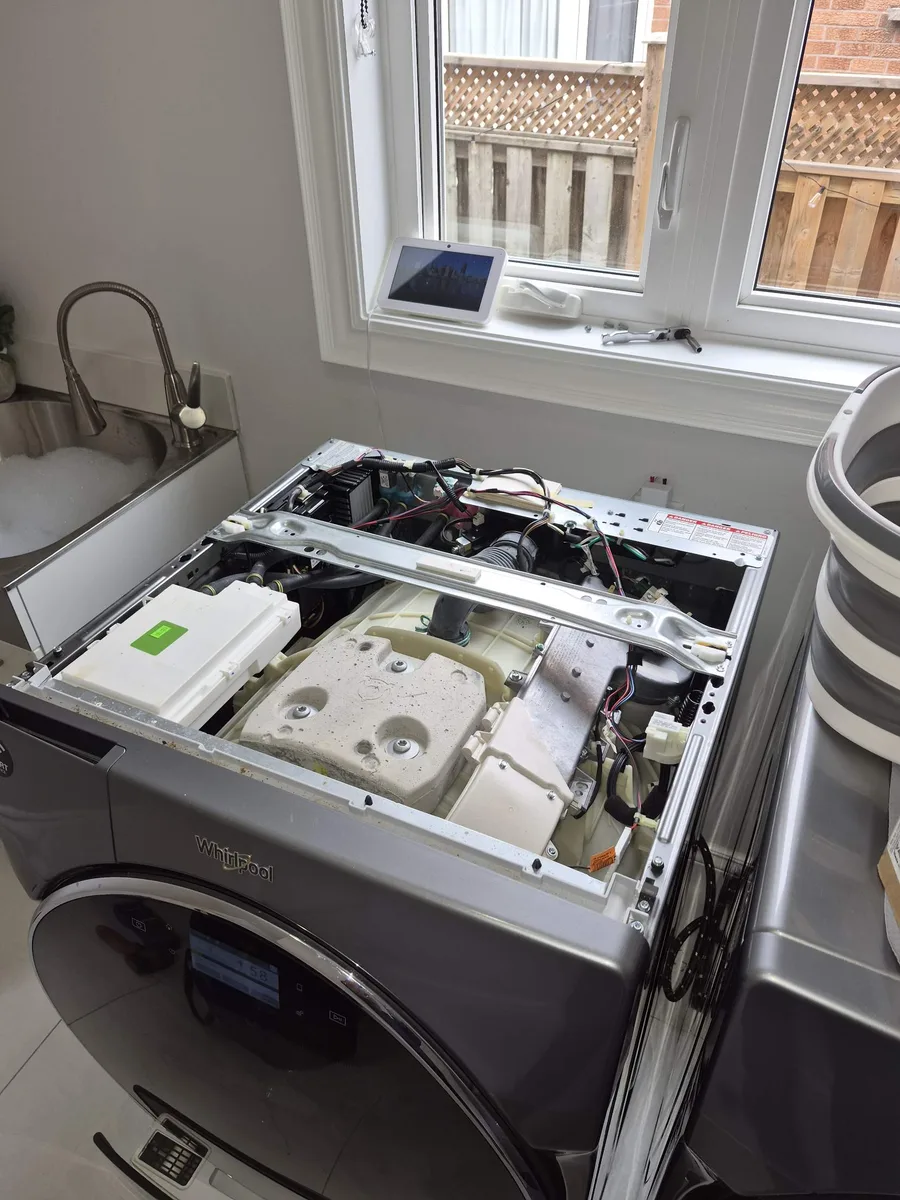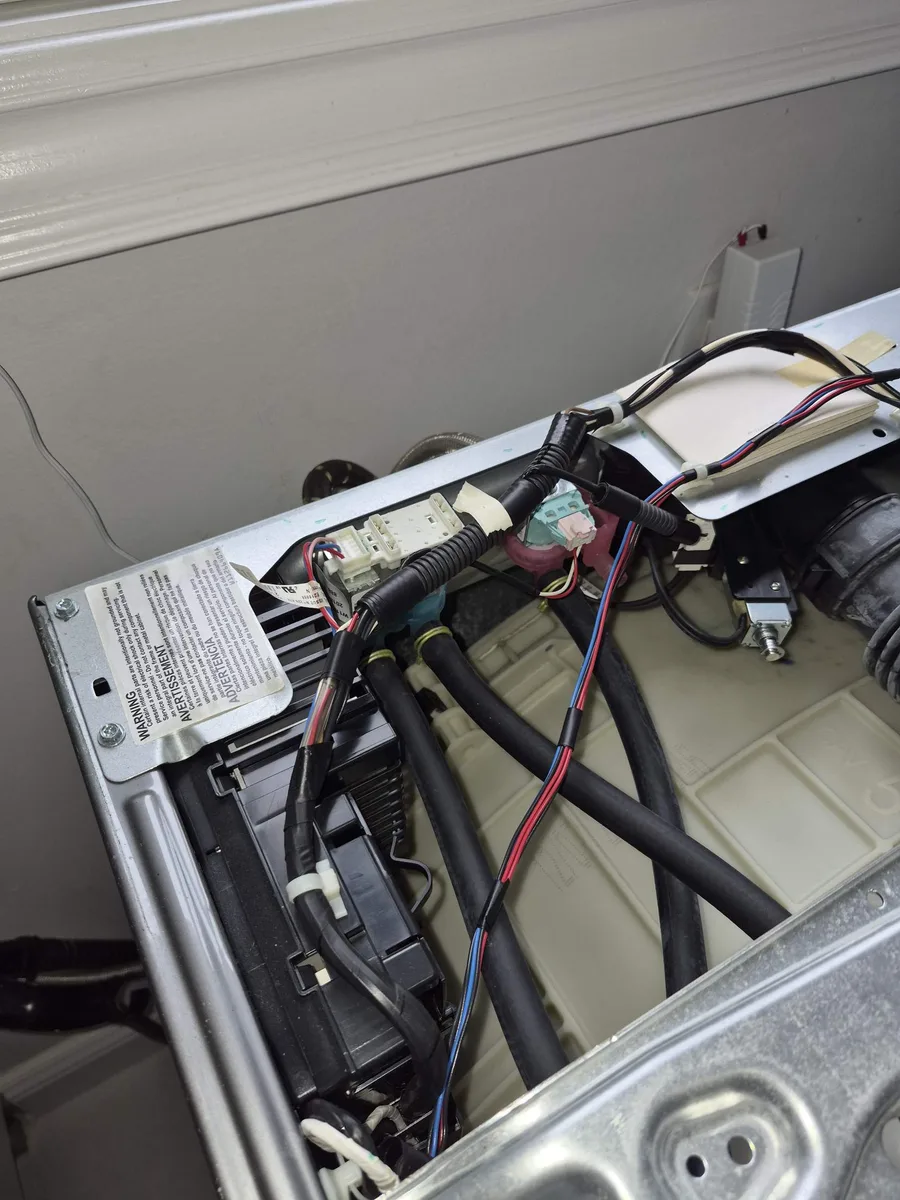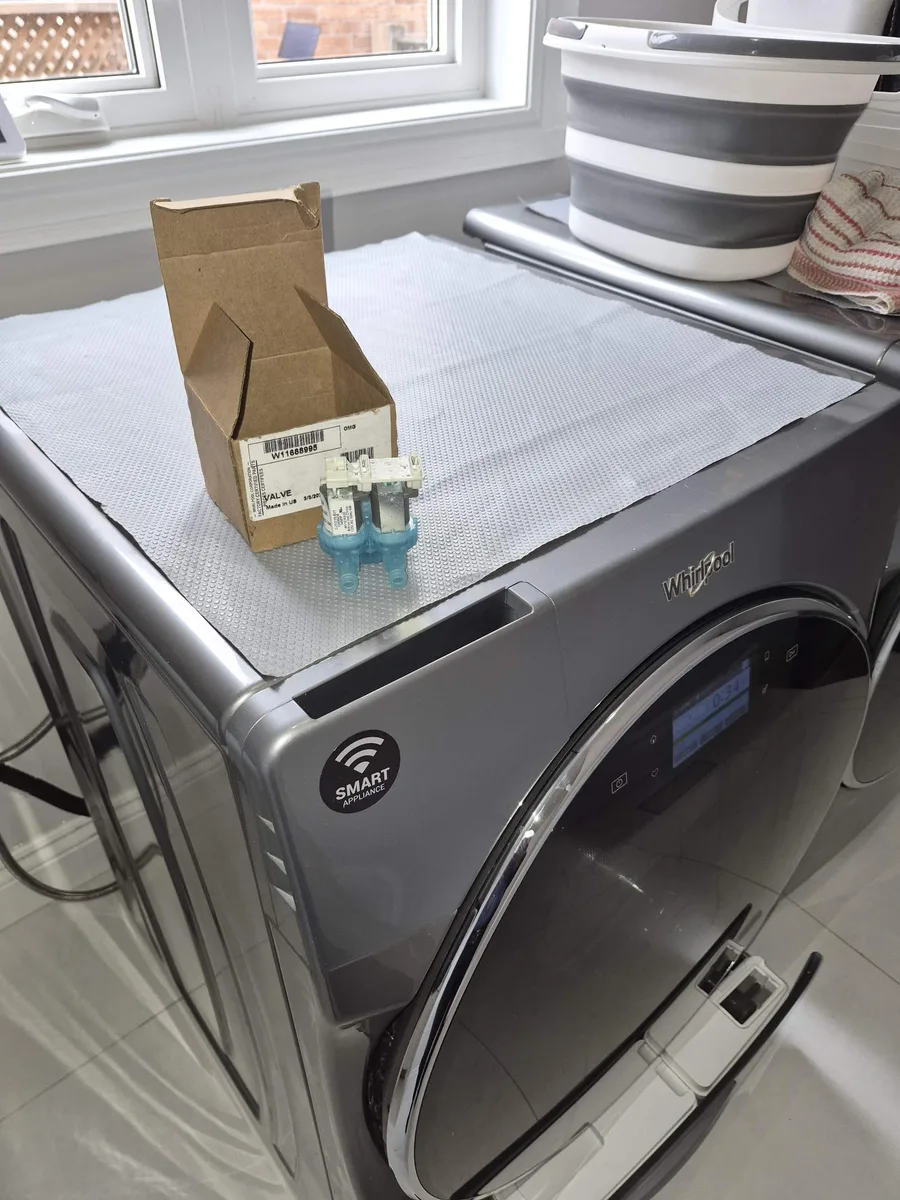
Washer Making Noise in Vaughan
If your washer is making grinding, banging, scraping, squealing, clicking, roaring, rattling, humming, knocking, or loud spin noises, the sound needs proper diagnosis before the damage spreads. Washer noise can come from a drain pump obstruction, worn bearings, loose counterweight, damaged shock absorbers, weak suspension, foreign objects, motor issues, drive system problems, tub movement, cabinet contact, or an out-of-round drum. Octopus Royal provides professional washer noise diagnosis in Vaughan, including Woodbridge, Maple, Thornhill, Kleinburg, Concord, condos, townhomes, stacked laundry closets, and rental properties.
Real technician insight: not every washer noise comes from inside the washer
A noisy washer does not always mean the bearing, motor, pump, suspension, or drum has failed. In real service calls, some washer noises come from the area around the machine, especially in tight Vaughan laundry closets, stacked setups, condos, townhomes, and basement laundry rooms. The noise may sound serious, but the source can sometimes be external contact, hose movement, or an item leaning against the washer.
This is why the timing of the noise matters. A banging sound at the end of drain may point somewhere completely different than a roaring sound during high-speed spin, a scraping sound when the drum turns, or a rattling sound only when the machine vibrates.
During drain or near the end of the drain cycle, the drain hose can bounce and hit the washer body or wall. This can sound like an internal knocking noise, especially when there is less water left inside the machine.
In tight laundry spaces, the washer may touch the dryer or nearby appliance. When the washer vibrates or shifts, that contact can create scratching, rubbing, or rattling sounds.
Ironing boards, storage bins, brooms, folding racks, detergent containers, and other items beside the washer can rattle against the cabinet during vibration, especially in closet-style laundry areas.
External noise can be embarrassing for the customer because the washer may not be broken at all. A proper diagnosis checks the surroundings before assuming a major internal failure.
Common causes of washer noise
Washer noise can come from inside the machine, around the machine, or from the surface supporting the washer. The timing of the sound matters. A grinding noise during drain, a roaring noise during high-speed spin, a banging noise during spin, a scraping sound when the drum turns, or a rattling sound only when the washer vibrates can all point to different causes.
Coins, buttons, hair pins, debris, broken plastic, or small clothing items can get into the pump area and create grinding, rattling, humming, or clicking noises during drain.
A deep roaring or airplane-style sound during high-speed spin can point toward bearing wear, tub support damage, or internal drum support problems.
A loose counterweight, worn shock absorber, weak suspension, or excessive tub movement can create banging, knocking, or heavy impact sounds during spin.
Bra wires, screws, coins, small metal objects, or debris can create scraping, ticking, or grinding sounds when the drum turns.
The drain hose can bounce against the washer body or wall during drain and spin. This can sound like an internal knocking noise even when the washer itself is not damaged.
In tight Vaughan laundry closets, the washer can rub against a dryer, side wall, cabinet, or nearby appliance and create scratching, rubbing, or rattling sounds.
Ironing boards, storage bins, brooms, drying racks, or detergent containers can rattle against the washer during vibration and make the machine sound broken.
A washer sitting on a wood box, raised platform, weak floor, or soft laundry room floor can amplify vibration and make the noise travel through the floor, walls, or even the whole house.
What we check during washer noise diagnosis
Washer noise diagnosis starts with when the sound happens. A noise during drain, spin, agitation, fill, drum rotation, or only when the washer vibrates can point to completely different problems. We check the sound pattern before assuming the washer needs a pump, bearing, motor, suspension, or control repair.
We check whether the noise happens during fill, wash, drain, rinse, spin, high-speed spin, or only at the end of the cycle. The timing often reveals the correct diagnostic direction.
We check the drain pump behavior, pump sound, drainage speed, and signs of obstruction when the washer makes grinding, clicking, humming, or rattling noise during drain.
We check for rough drum rotation, side movement, roaring during spin, scraping, uneven gaps, and signs of bearing, spider arm, tub support, or inner drum damage.
We check shock absorbers, suspension movement, counterweight condition, tub bounce, cabinet impact, and whether the washer is creating banging or knocking during spin.
We check whether the washer is touching a dryer, cabinet, wall, shelf, laundry closet frame, or nearby stored item that may be creating scratching, tapping, or rattling noise.
We check whether the drain hose is bouncing, tapping, or banging against the washer body or wall during drain and spin, especially near the end of the drain cycle.
We check whether the washer is sitting on a wood box, raised platform, weak floor, soft floor, or flexible laundry area that can amplify vibration and make the sound travel through the home.
We check whether the noise started after heavy blankets, shoes, mixed fabric loads, small loads, overloads, vibration events, previous movement, or repeated out-of-balance cycles.
Do not ignore a washer noise that keeps getting louder
A washer that is making a new grinding, roaring, banging, scraping, knocking, rattling, or humming sound should be checked before the problem spreads. Some noises are simple external issues, like a drain hose tapping behind the washer or an item leaning against the cabinet. Other noises can point to drain pump obstruction, bearing wear, suspension failure, loose counterweights, drum support problems, or motor-related issues.
This is especially important in Vaughan condos, stacked laundry closets, townhomes, basement laundry rooms, and rental properties. A noisy washer can transfer vibration through floors and walls, damage nearby cabinets, move out of position, pinch hoses, create drain or fill problems, or turn a small issue into a more expensive repair if it keeps running under stress.
The sound itself is only part of the diagnosis. The timing matters more. A noise during drain, high-speed spin, drum rotation, vibration, or only when the washer touches something nearby can lead to completely different repair paths.
Why Vaughan homeowners choose Octopus Royal
Octopus Royal uses in-house technicians, not subcontractors. Our technicians are not commission-based, and we do not push unnecessary repairs. We diagnose where the washer noise is actually coming from, explain the findings clearly, provide the repair price, and only proceed after approval.
For washer noise problems in Vaughan, that means we do not automatically assume the machine needs bearings, a motor, a pump, or suspension parts. We check the sound timing, drain pump behavior, drum movement, bearing sound, tub support, shocks, counterweights, floor vibration, external cabinet contact, drain hose movement, and nearby objects before recommending repair.
Other washer issues we repair in Vaughan
Washer noise is often connected to other washer problems. A noisy washer may also shake, stop during spin, show balance errors, fail to drain, move out of position, pinch hoses, scrape against nearby appliances, or create vibration through the floor. These Vaughan washer repair pages help homeowners, landlords, and property managers find the right diagnostic path.
Related washer and appliance services in Vaughan
A washer making noise may need drain pump diagnosis, vibration inspection, bearing and drum support testing, suspension checks, hose movement correction, floor vibration assessment, or a full washer repair visit. For broader appliance support in Vaughan, these related Octopus Royal pages help homeowners, landlords, and property managers find the right service.
FAQ about washers making noise in Vaughan
Why is my washer making a loud noise?
A loud washer noise can come from a drain pump obstruction, worn bearing, loose counterweight, weak suspension, foreign object, cabinet contact, drain hose movement, floor vibration, motor issue, or drum support problem. The timing of the noise is important for diagnosis.
Why does my washer make noise during drain?
Noise during drain can come from the drain pump, pump filter, small objects inside the pump path, a weak pump, or the drain hose bouncing behind the washer. A drain hose tapping the washer body can sound like an internal knocking problem.
Why does my washer sound like an airplane during spin?
A deep roaring or airplane-style sound during high-speed spin can point toward worn bearings, tub support damage, spider arm issues, or internal drum support problems. The drum movement and sound pattern should be checked before repair is recommended.
Can the washer make noise because it is touching the dryer or cabinet?
Yes. In tight laundry closets and stacked laundry areas, the washer can touch a dryer, cabinet, wall, shelf, or nearby stored item. When the washer vibrates, that contact can create scratching, tapping, rattling, or rubbing sounds.
Can a wood platform or soft floor make washer noise worse?
Yes. A washer sitting on a wood box, raised platform, weak floor, soft floor, or flexible laundry closet floor can amplify vibration. The washer may sound louder because the vibration travels through the floor, walls, or nearby rooms.
Should I keep using the washer if it is making grinding or scraping noise?
It is better to stop using the washer until the source is checked. Grinding or scraping can come from a pump obstruction, foreign object, bearing problem, drum contact, or internal support issue. Continued use can make the damage worse.
Can a noisy washer also cause leaking or fill problems?
Yes. A washer that vibrates heavily can move out of position, pinch fill hoses, loosen connections, stress the drain hose, or create contact with nearby cabinets and appliances. Noise and vibration should be checked before they create a second problem.
Do you diagnose washer noise in Woodbridge, Maple, Thornhill, and Concord?
Yes. Octopus Royal provides washer noise diagnosis across Vaughan, including Woodbridge, Maple, Thornhill, Concord, Kleinburg, condos, townhomes, stacked laundry closets, basement laundry rooms, and property-managed homes.
Washer making noise? Book diagnosis before the sound turns into damage.
A noisy washer can be caused by a drain pump obstruction, loose counterweight, worn bearing, weak suspension, foreign object, drum support issue, drain hose movement, cabinet contact, floor vibration, or items leaning against the washer. The timing of the noise matters. Vaughan appointment availability can fill quickly, especially for washer noise calls in condos, townhomes, stacked laundry closets, basement laundry rooms, rental properties, Woodbridge, Maple, Thornhill, Concord, and Kleinburg. Book early so the washer can be diagnosed before unnecessary parts are replaced.
Before assuming the washer has a major internal failure, check whether the drain hose is tapping behind the washer, the washer is touching the dryer or cabinet, or stored items are leaning against the machine. If the noise is grinding, roaring, scraping, banging heavily, getting worse, or happening during high-speed spin, the washer should be professionally checked.
Last updated: May 2026